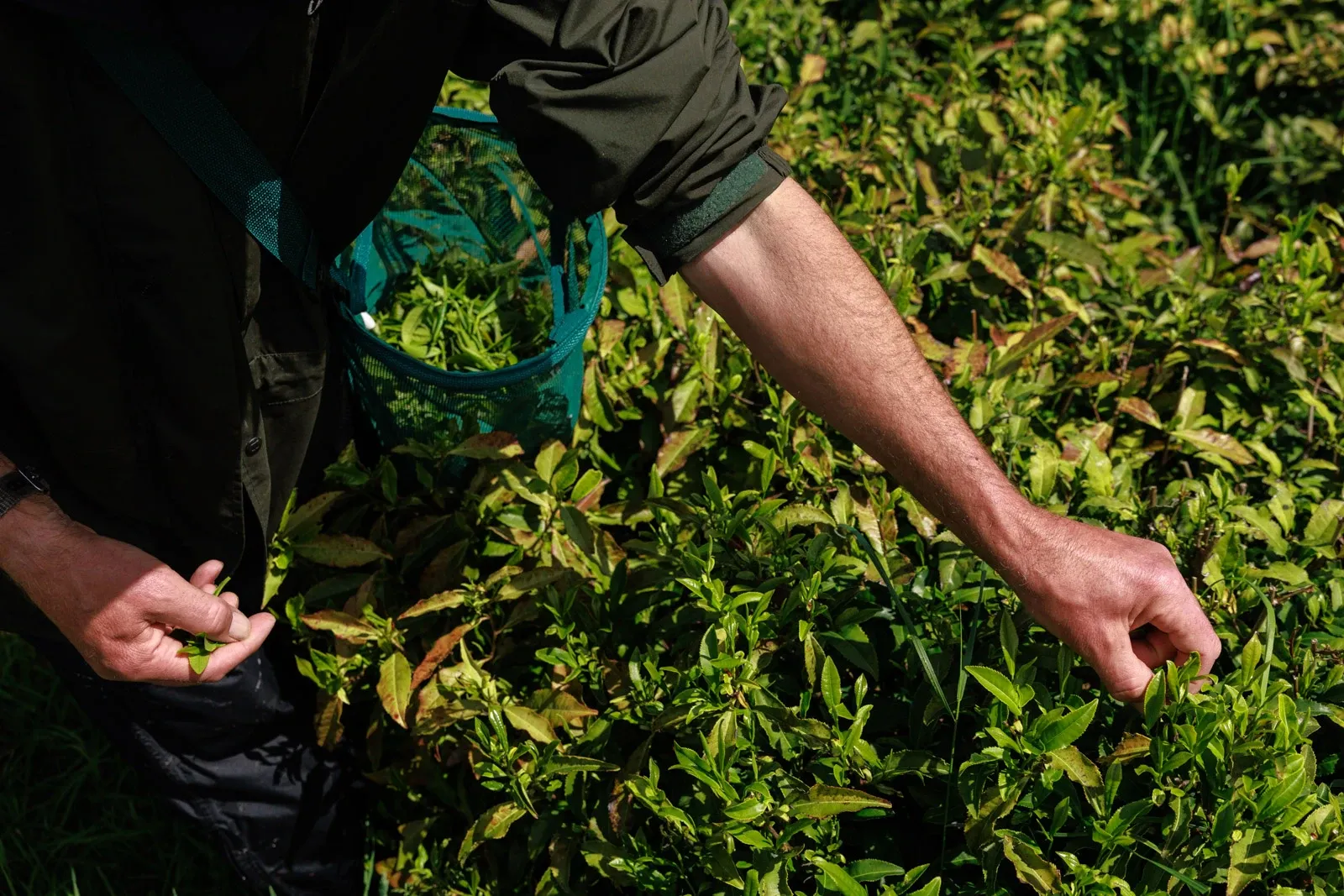
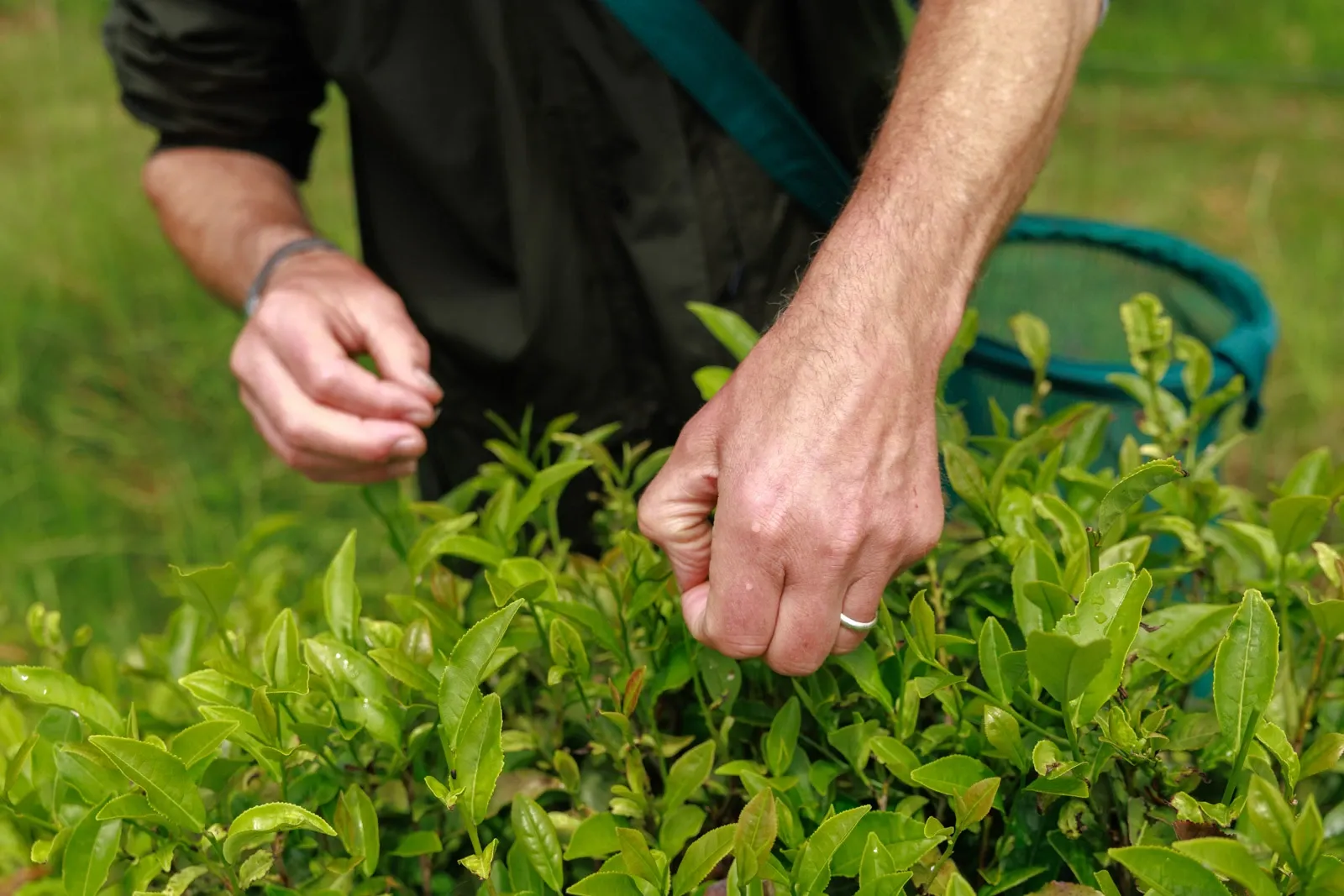
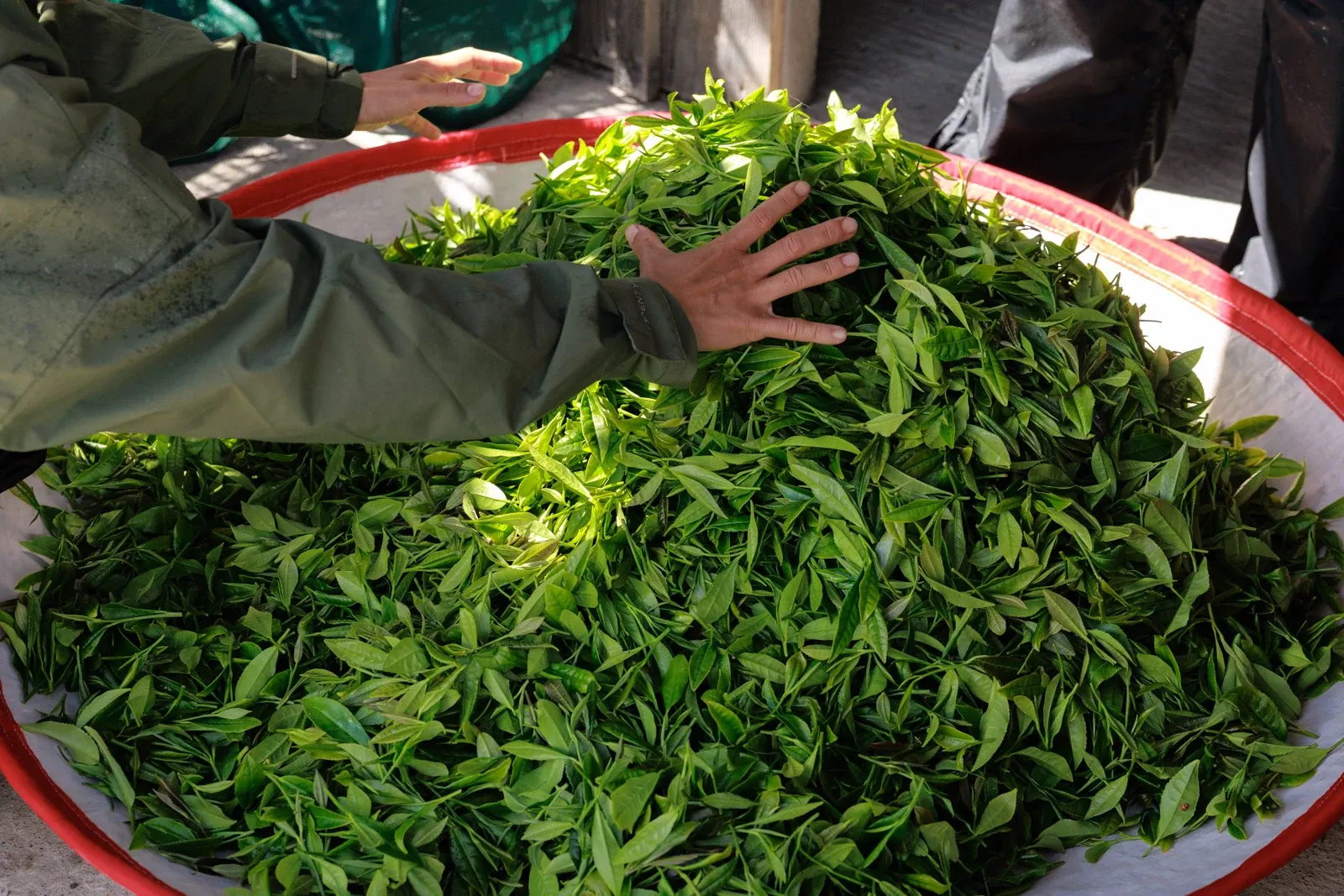
Sun stained hands and arms stretch over tea bushes for ready leaves

Dartmoor Tea Estate

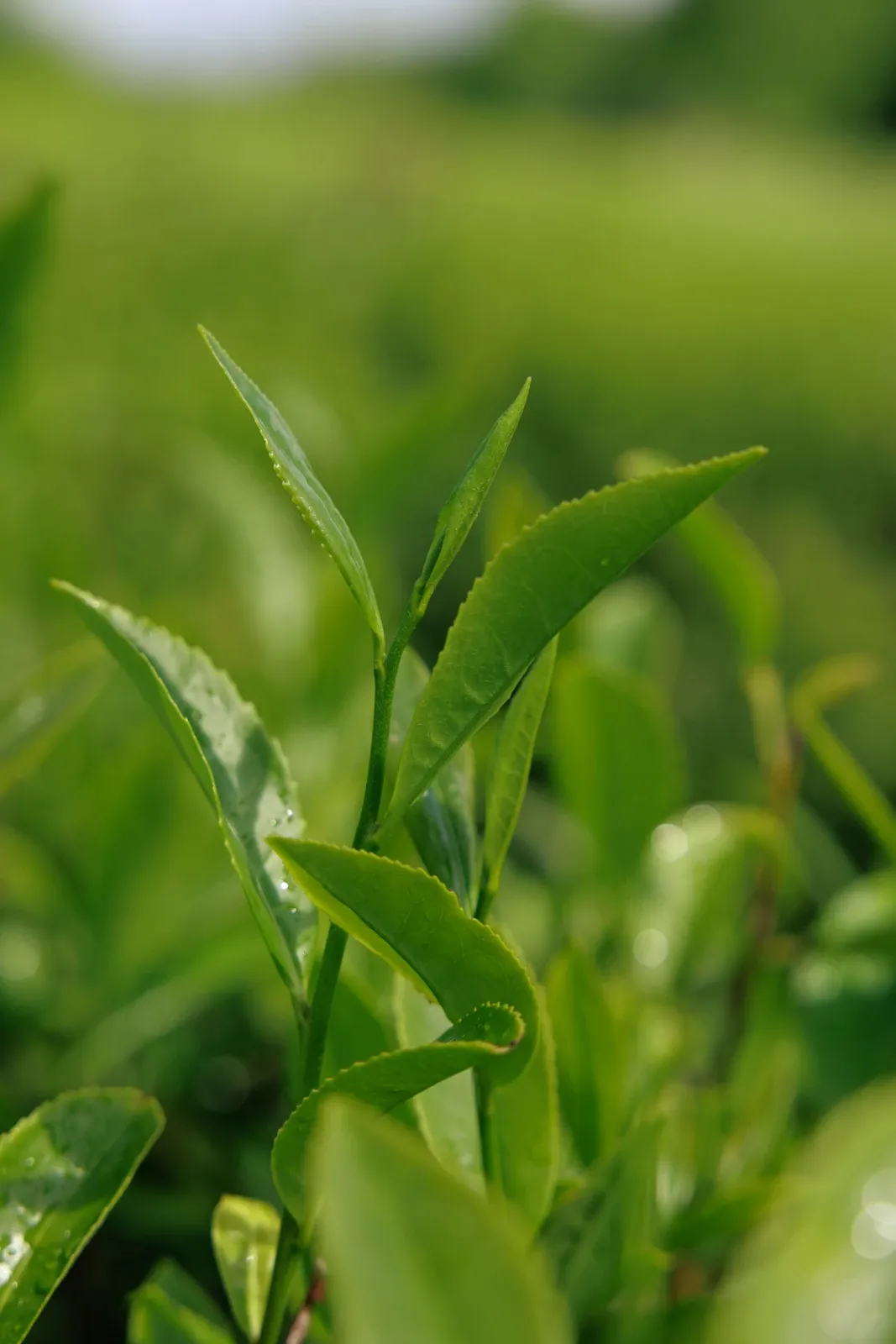
A tea plant's leaves ready for picking, two leaves and a bud
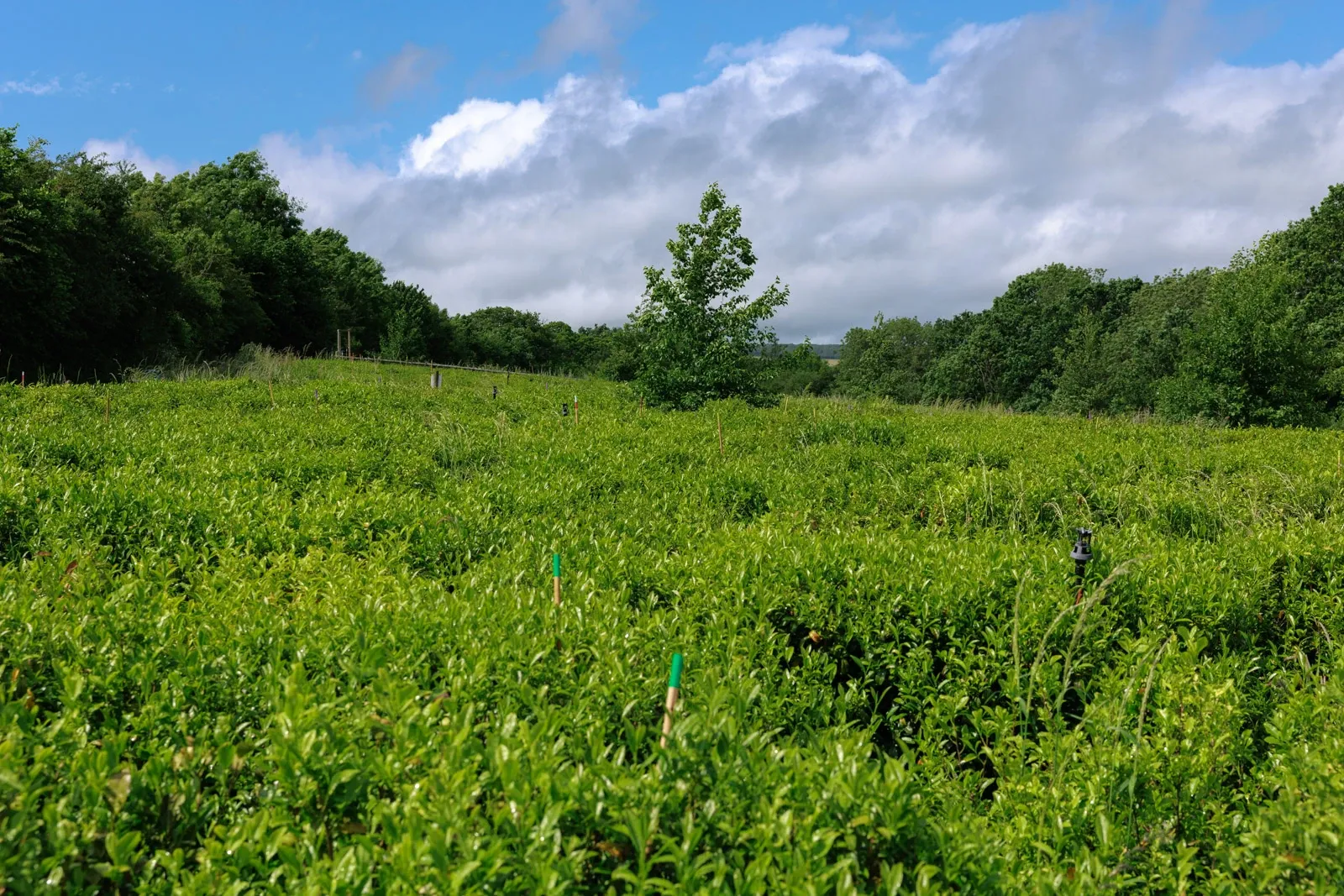
The Dartmoor Tea Estate fields
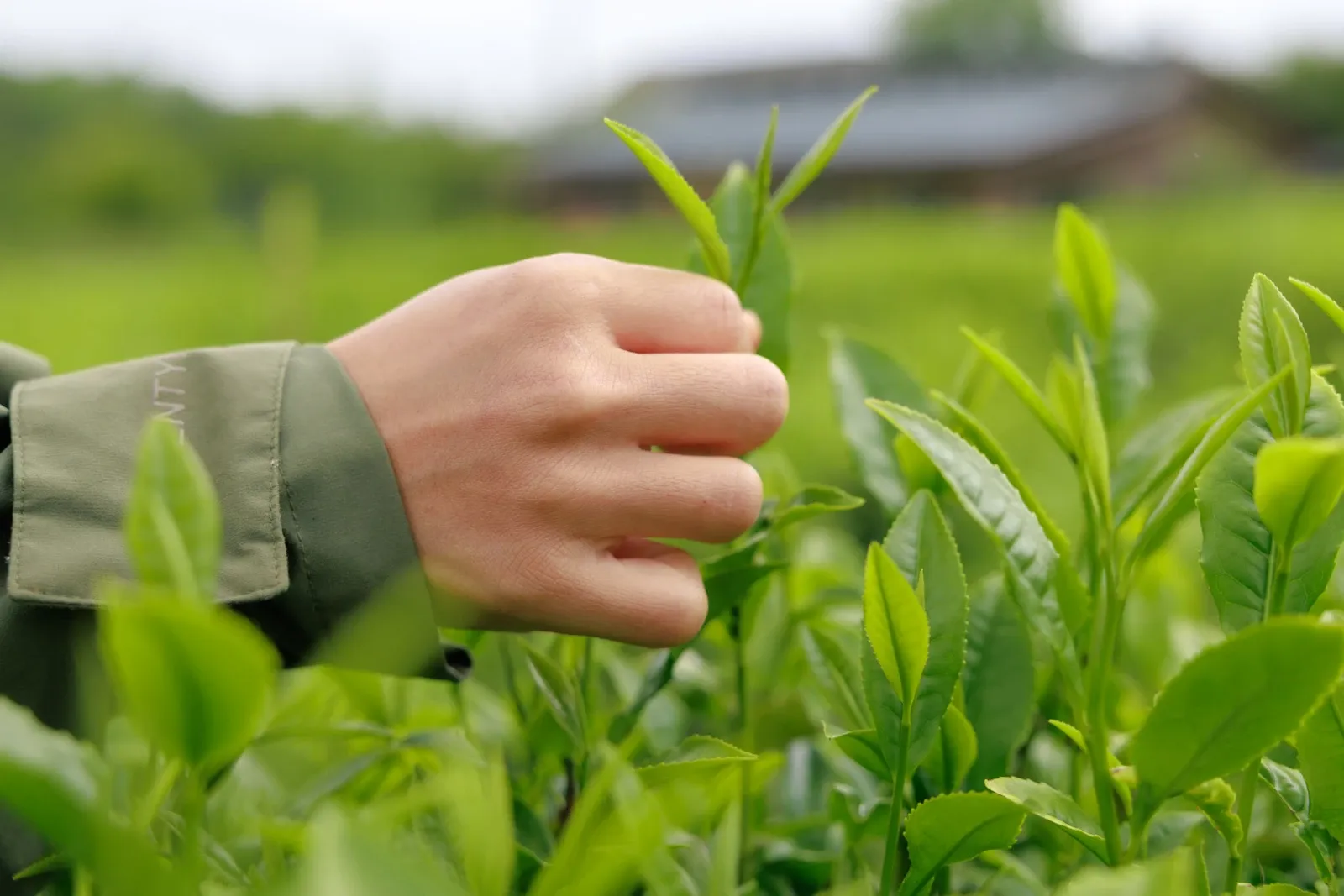
A close up of tea farmer Yuki's hand, picking tea leaves
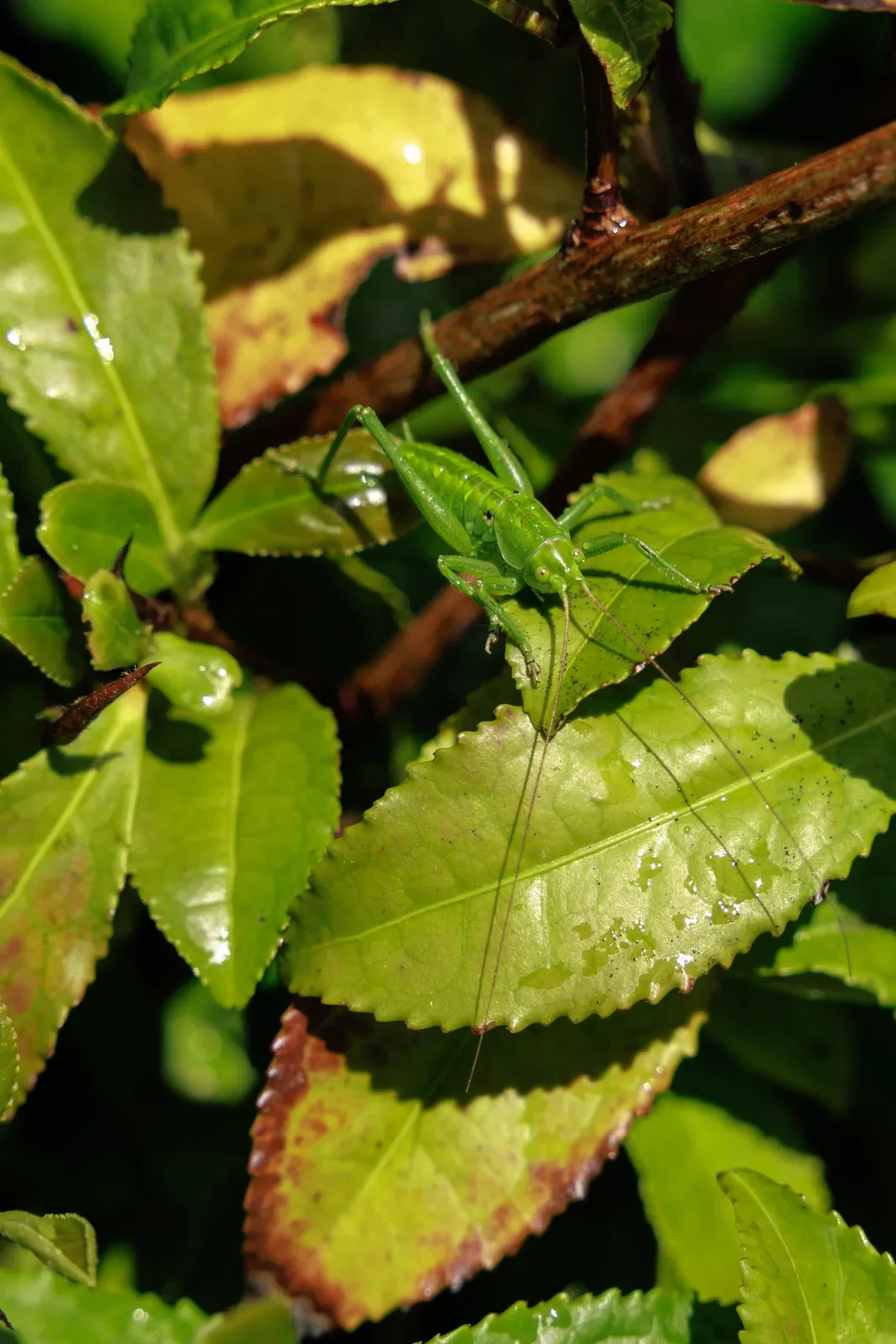
A great green bush-cricket sits on a tea leaf
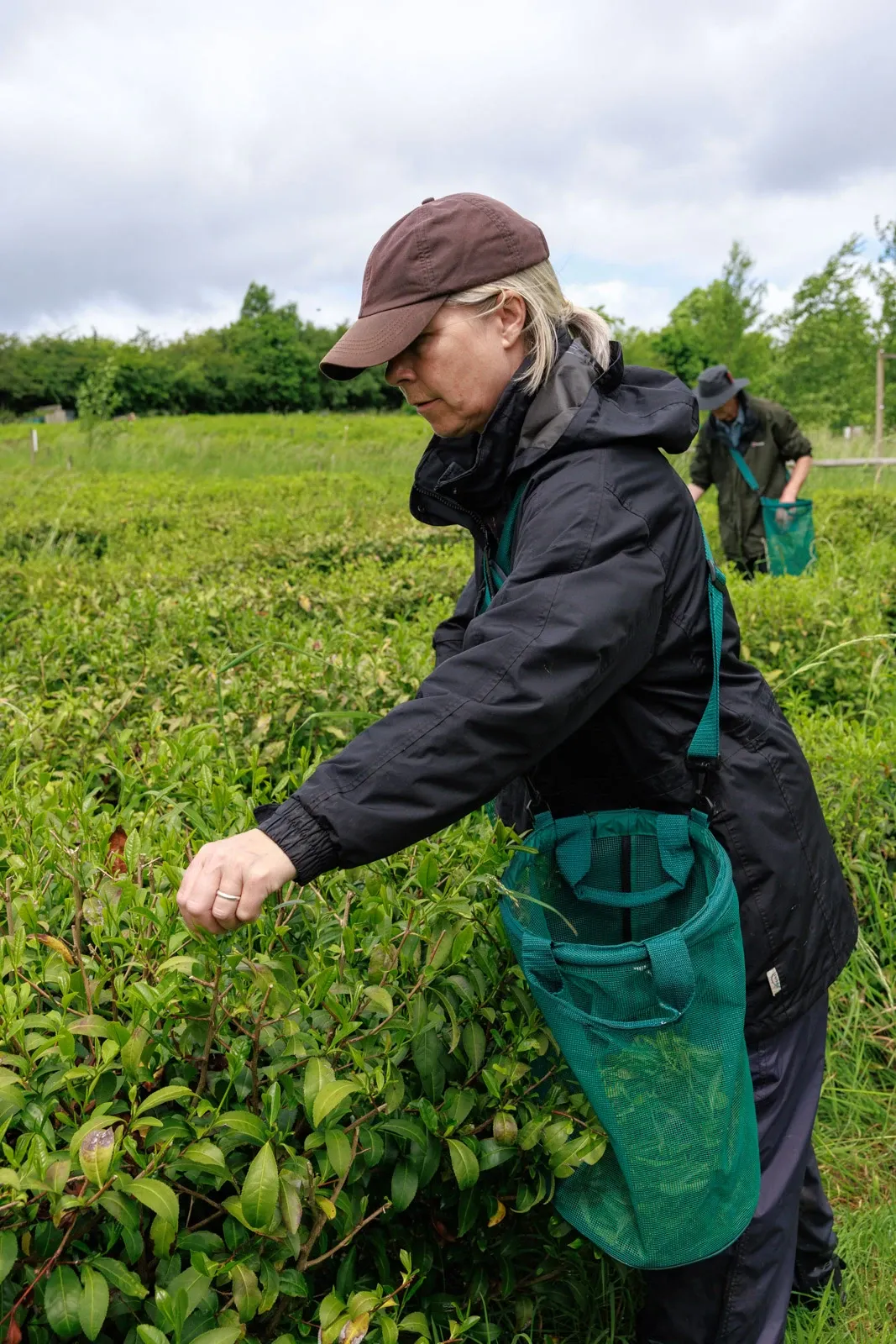
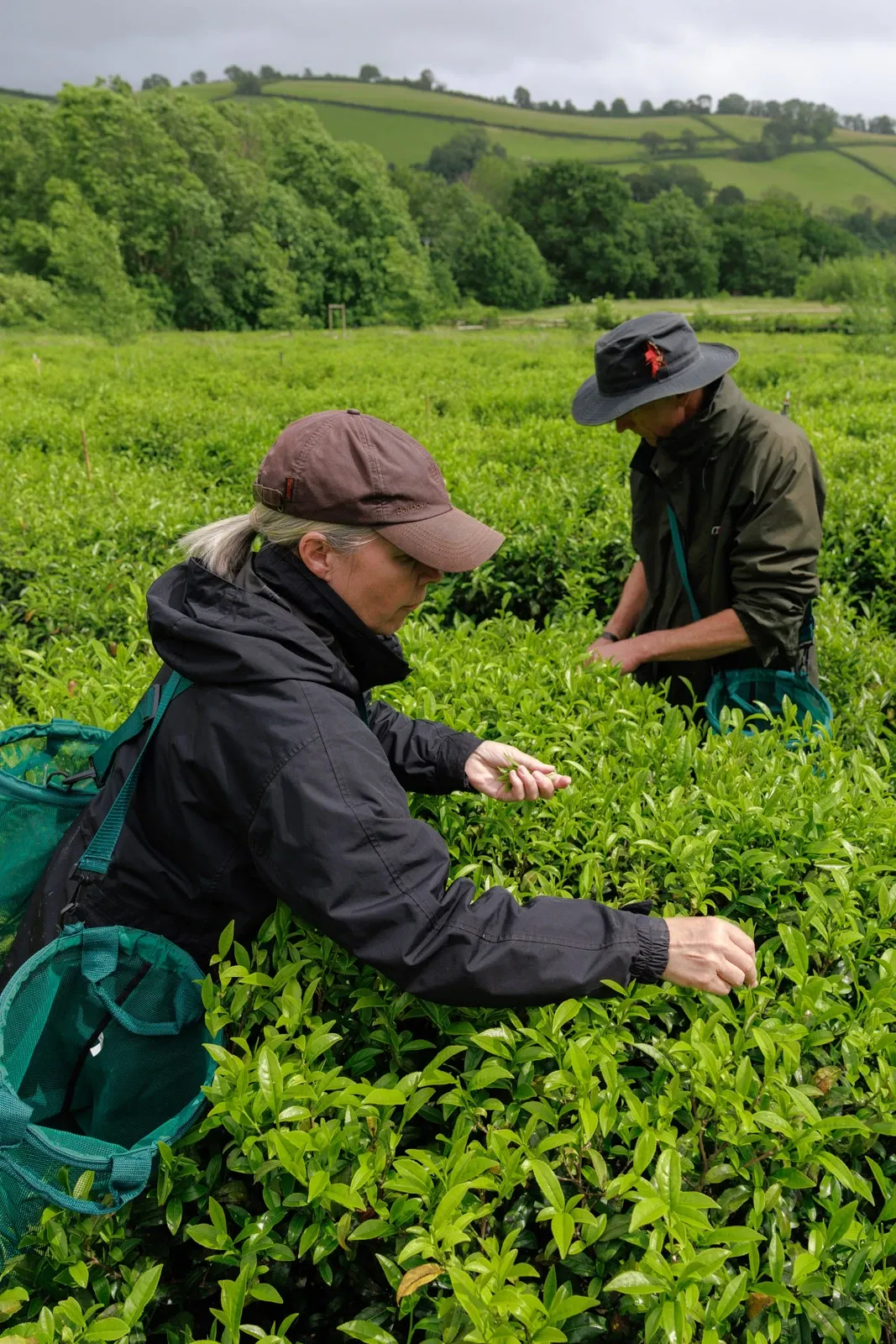
Tea farmer Kathryn picks tea with her bag for storing the leaves
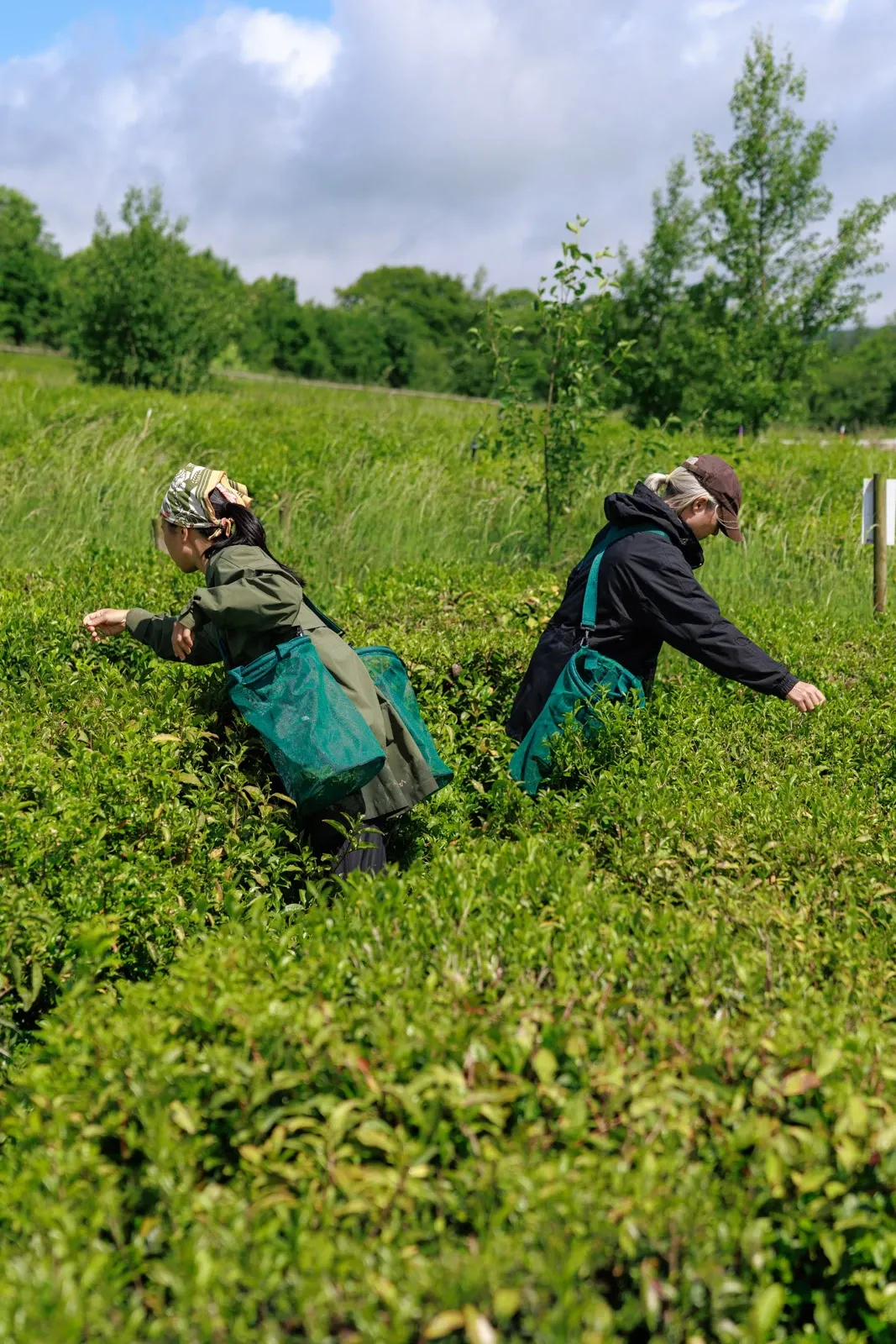
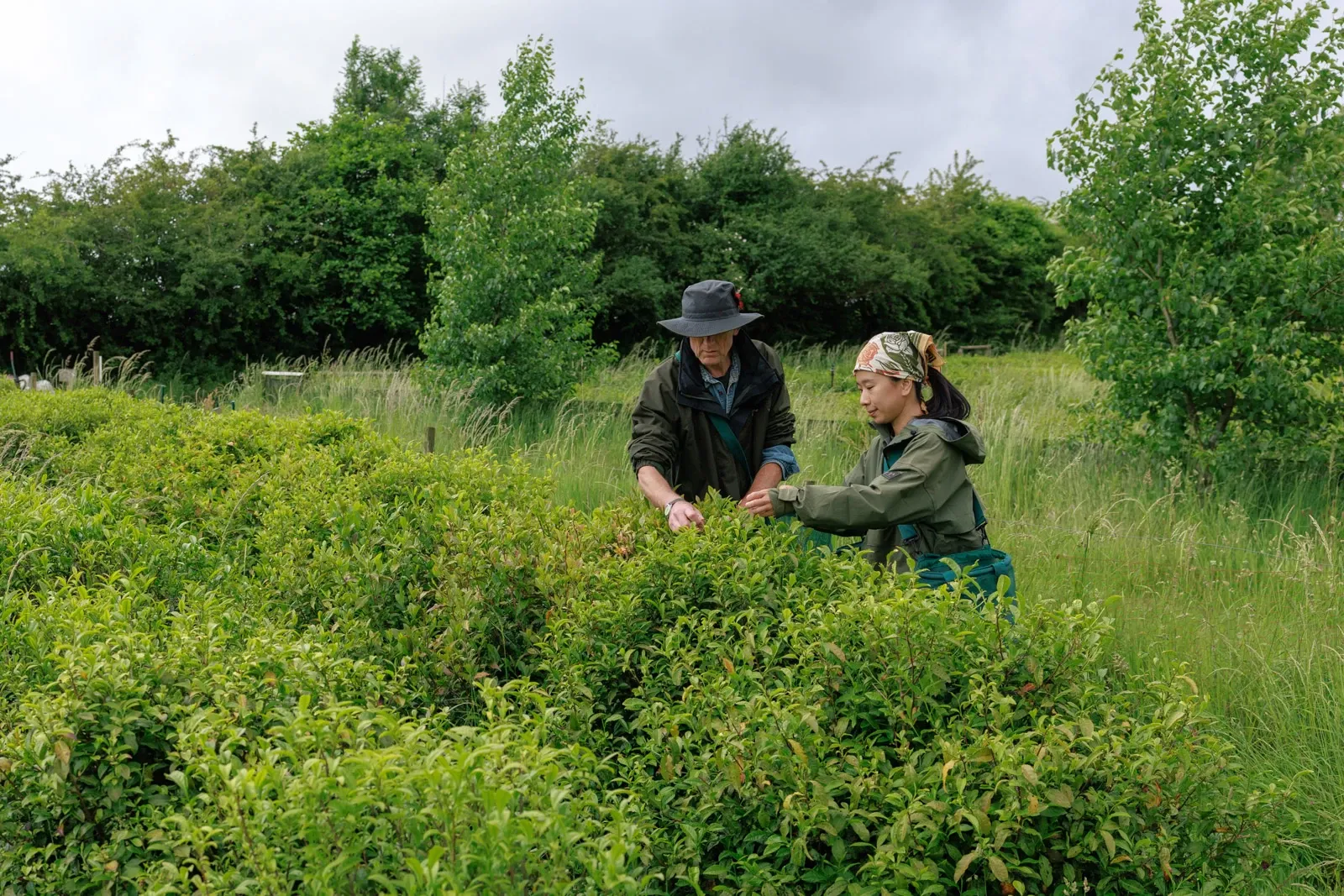
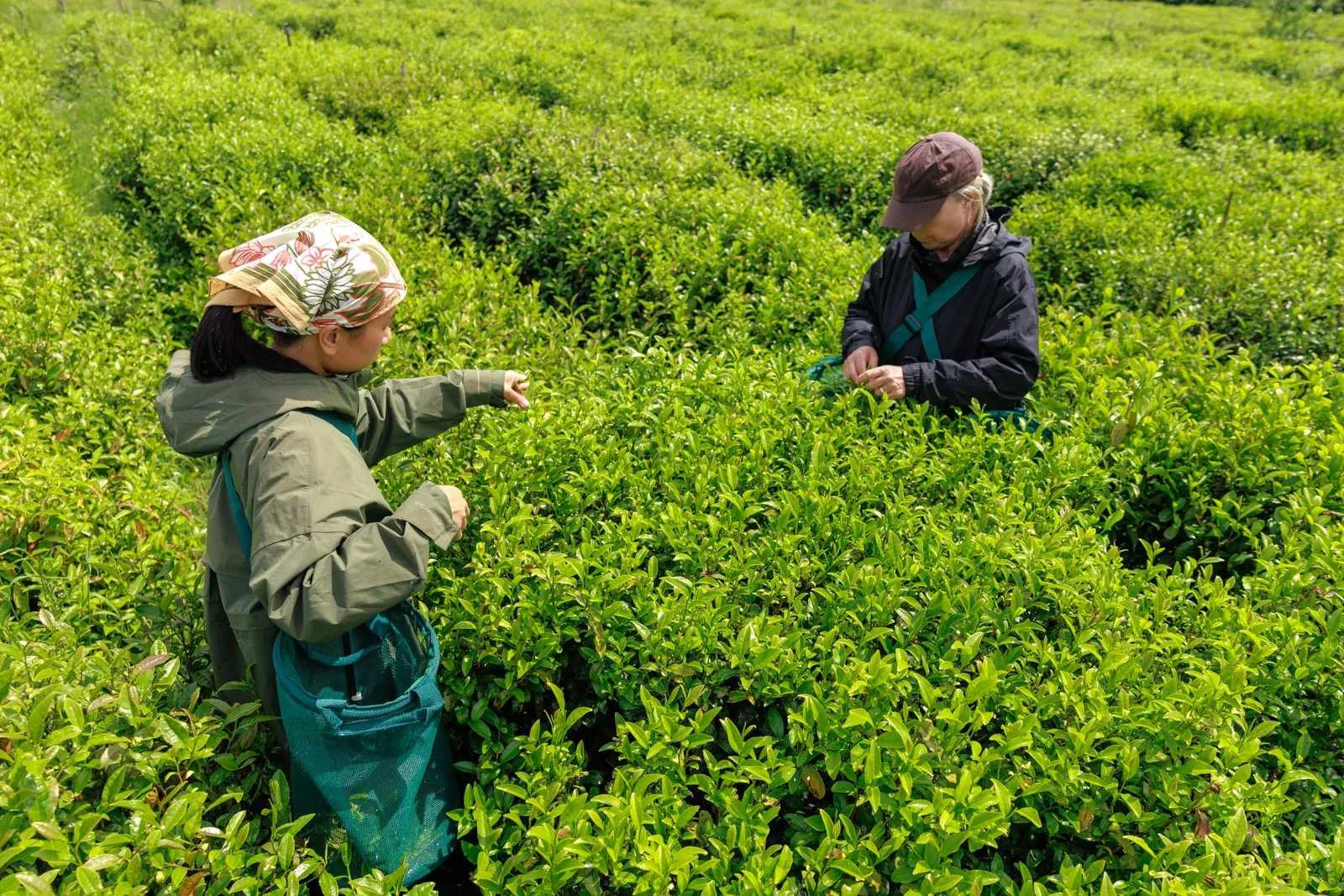
Tea farmers Kathryn and Yuki stretch over the tea plants to pick the leaves
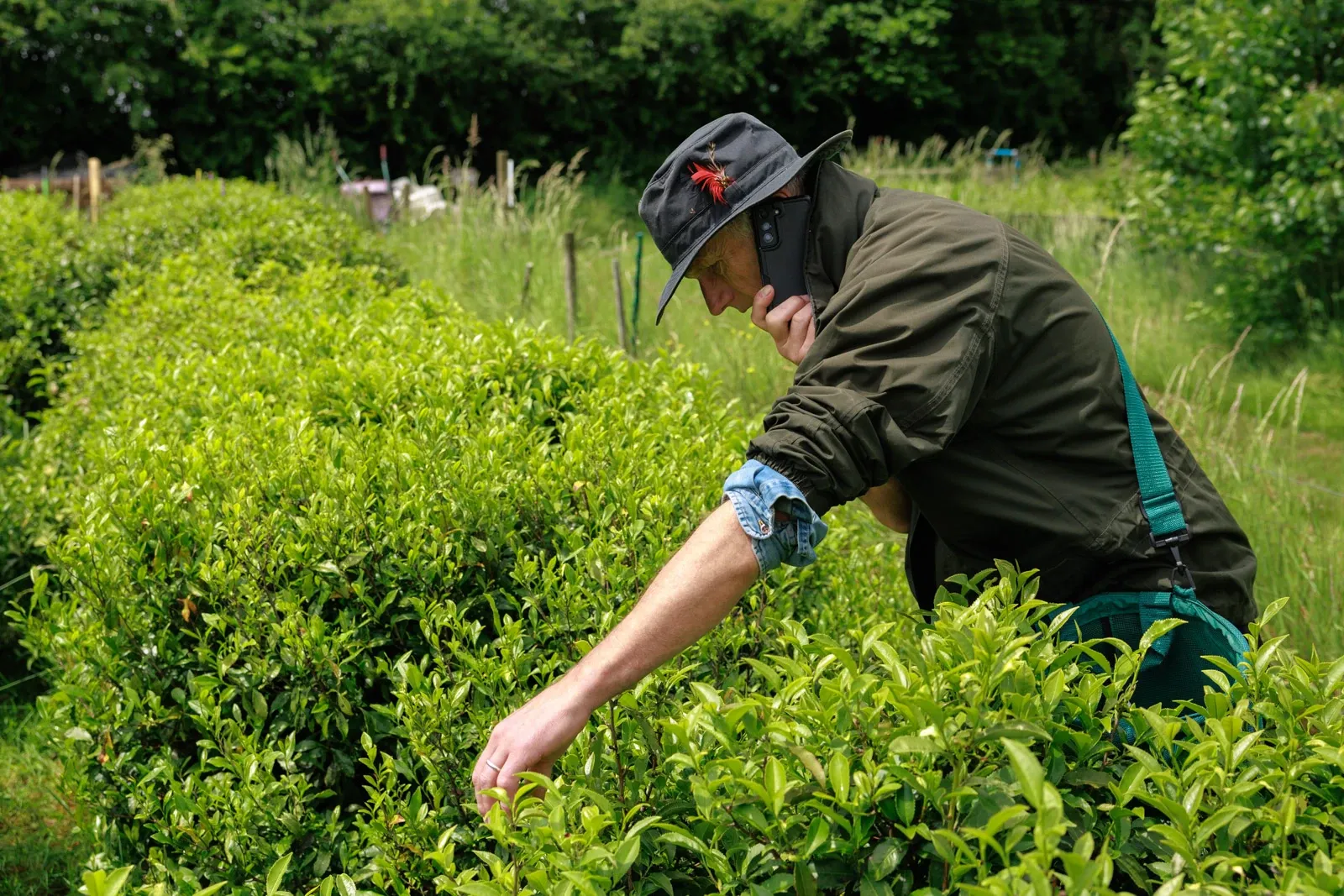
Tea farmer Jo talks on the phone while he picks tea leaves
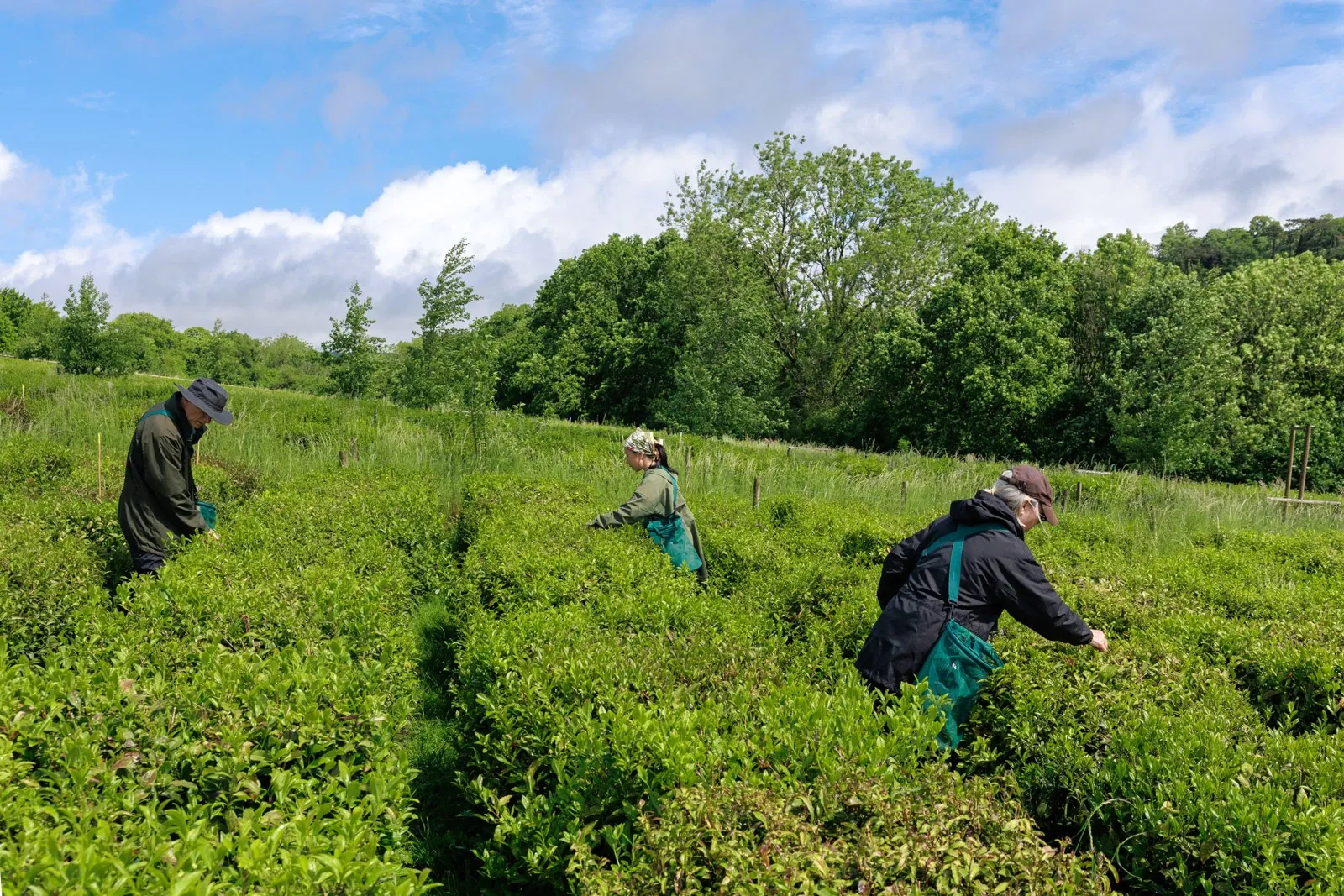
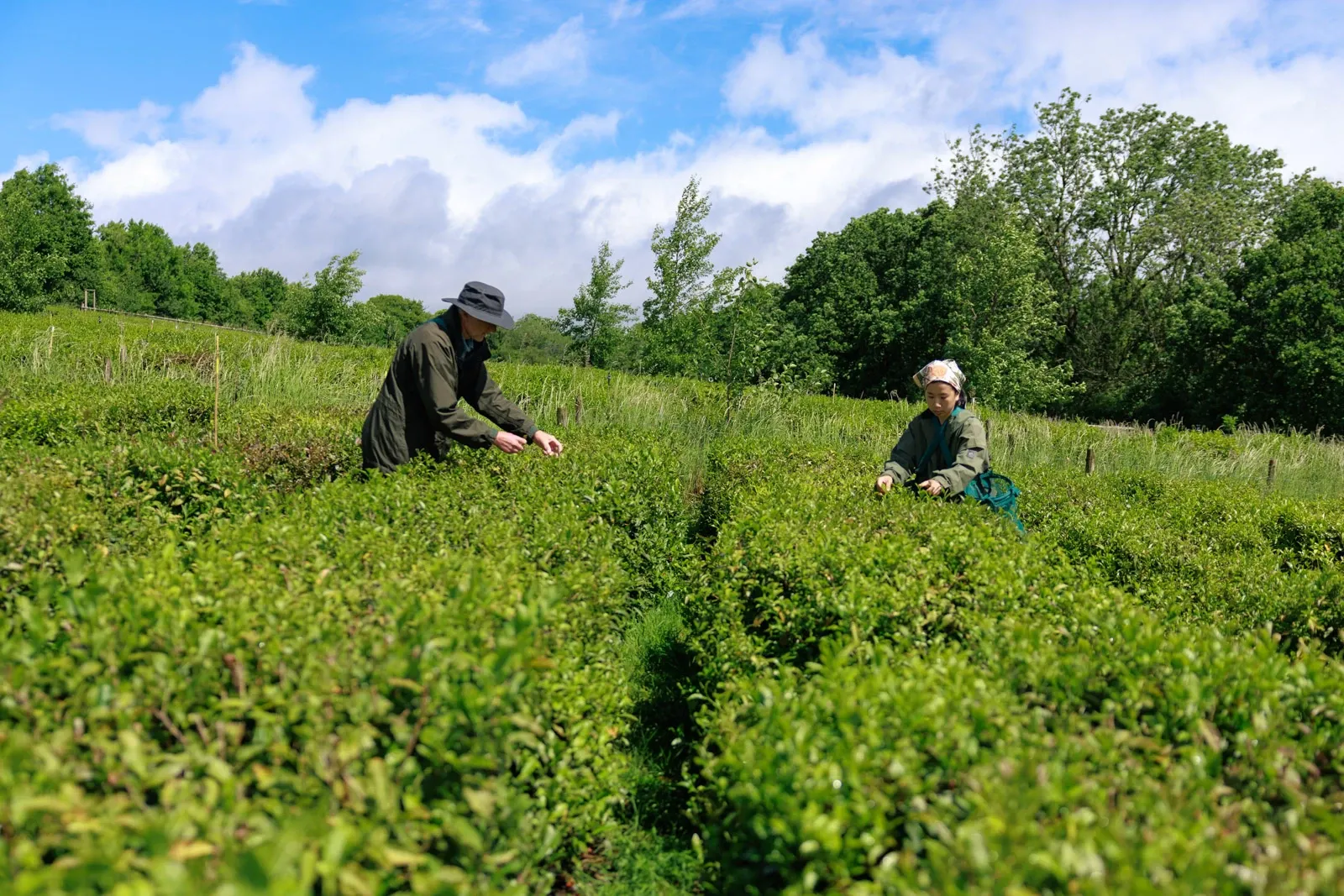
The Dartmoor Tea Estate team pick leaves in their field
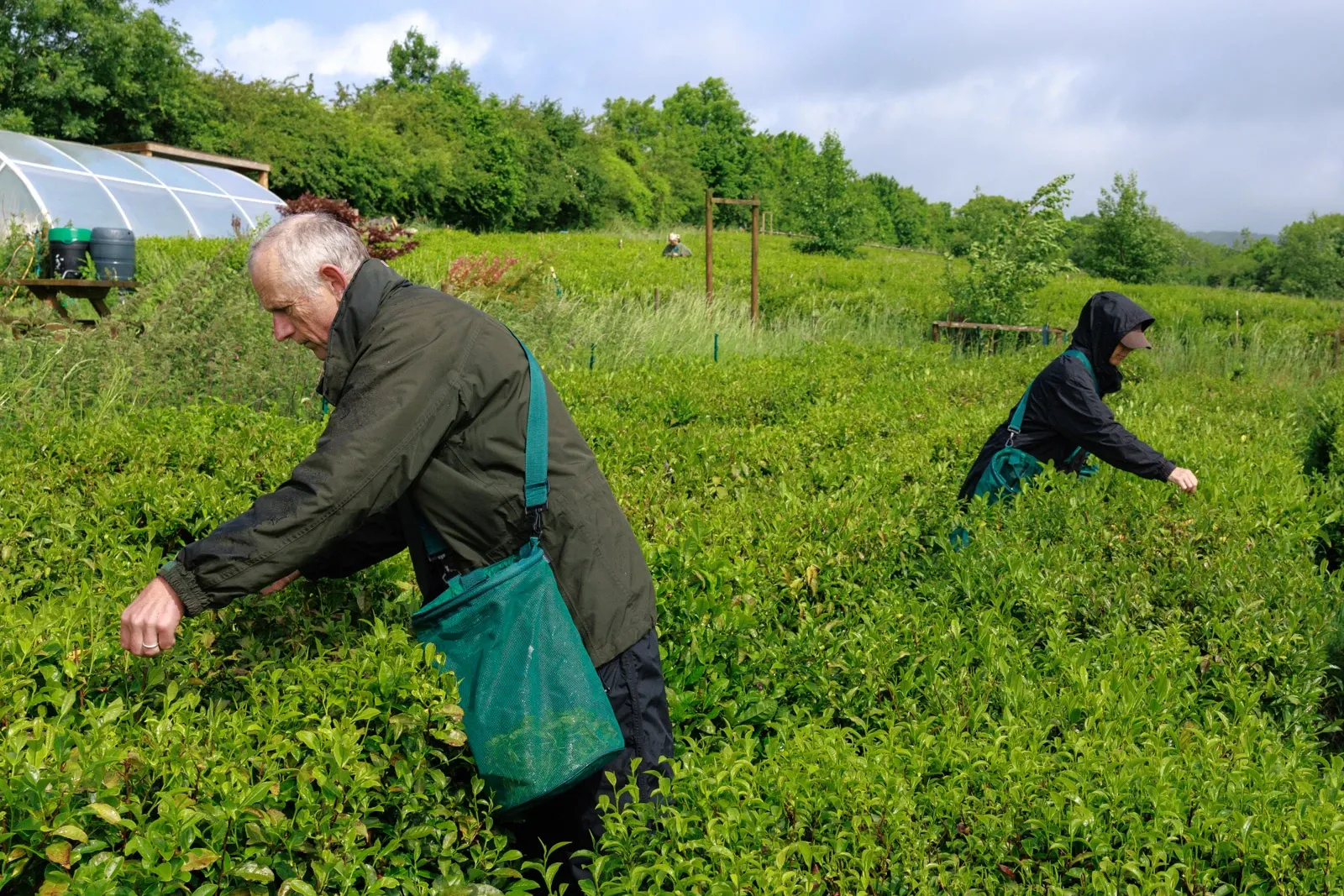
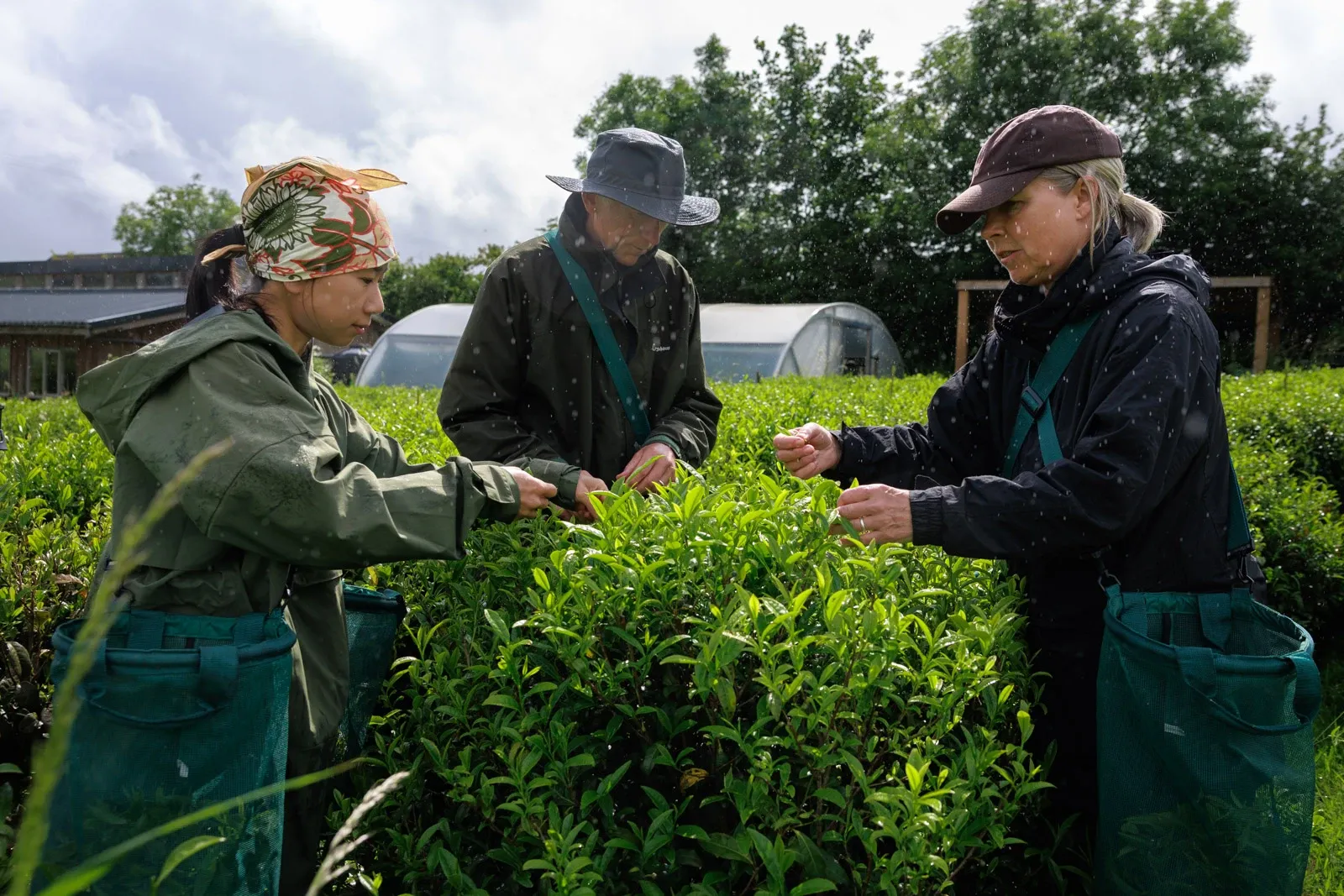
Tea farmers pick tea on a rainy day
Tea farmers pick tea amongst a biodiverse, companion planted tea farm
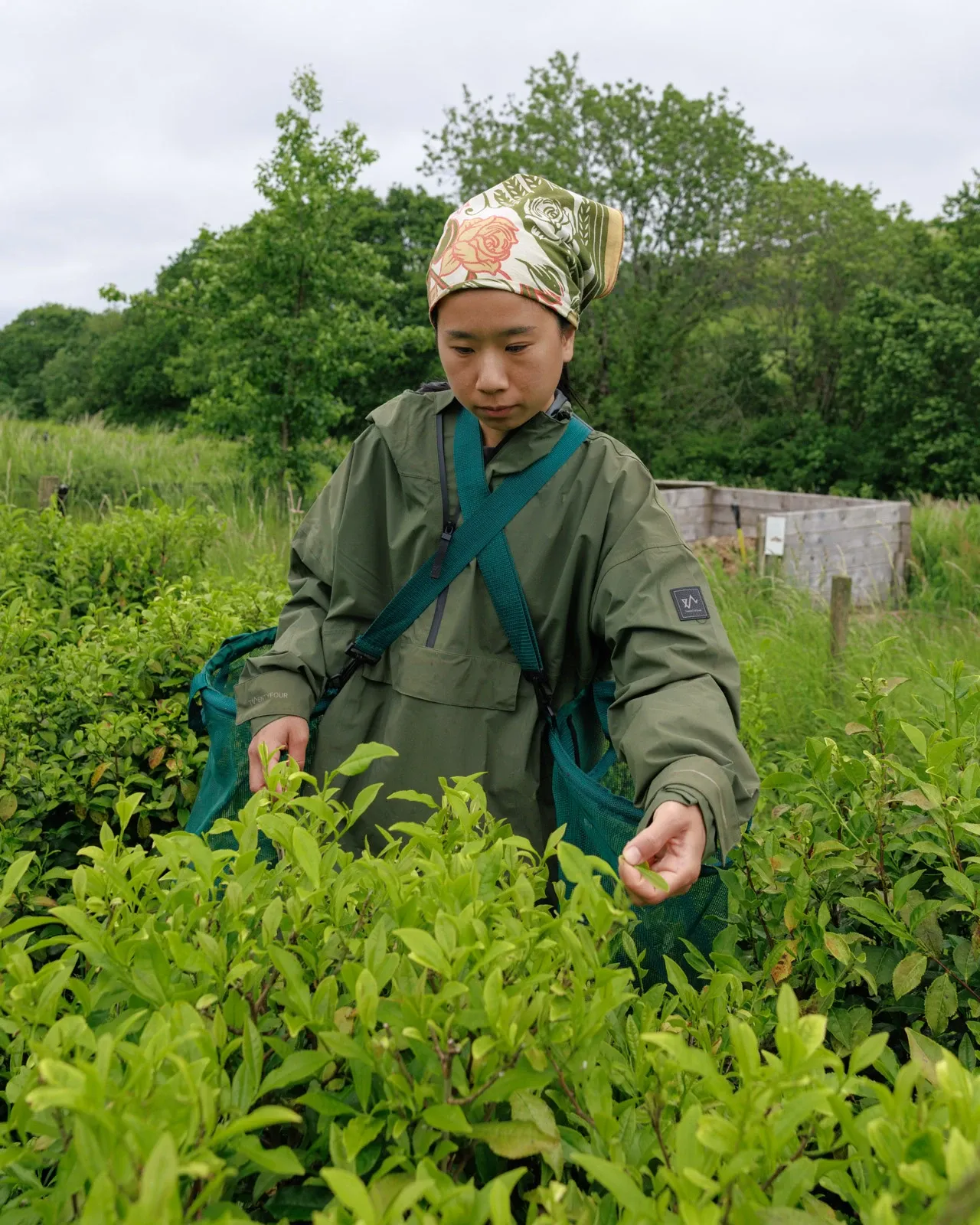
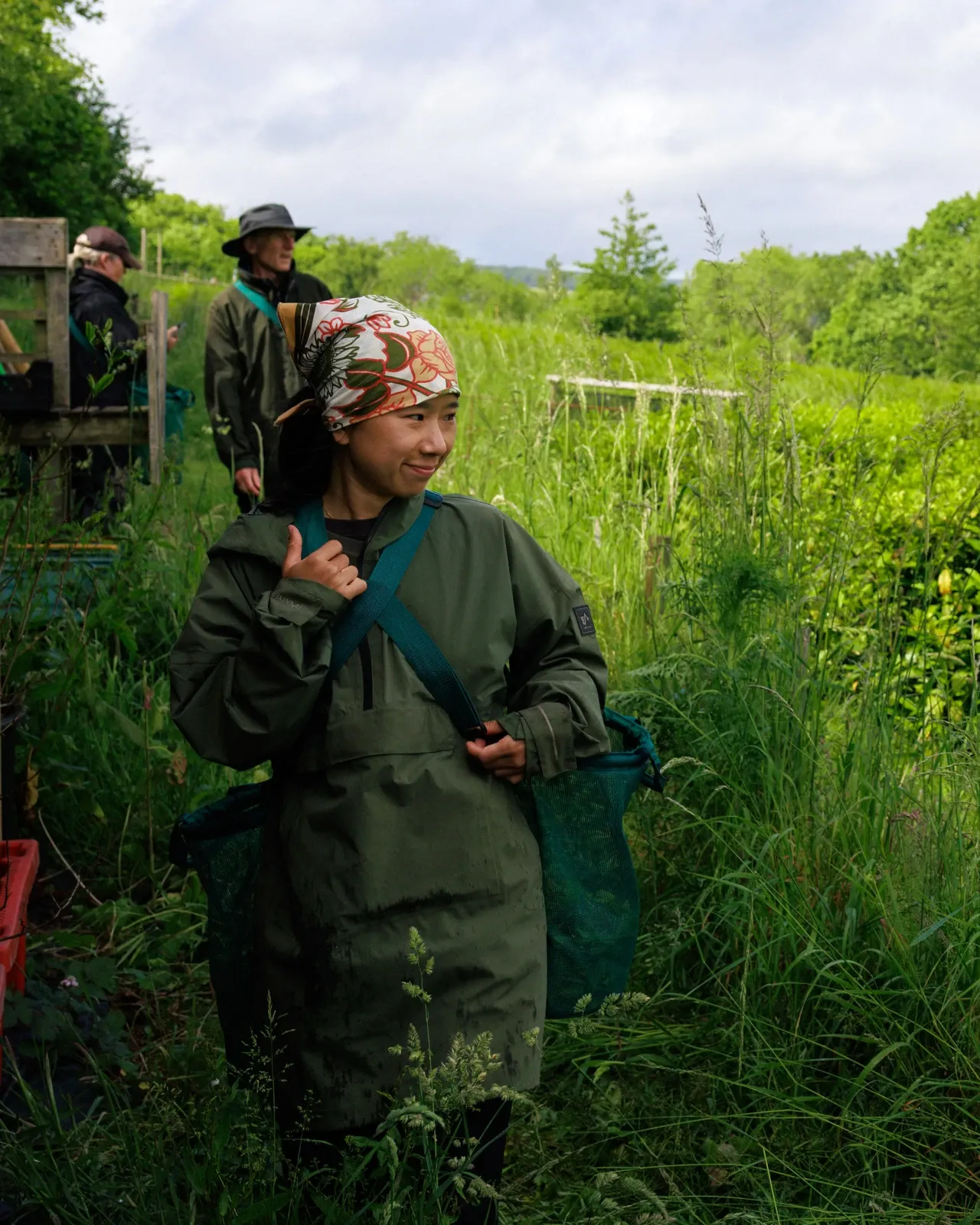
Tea farmer Yuki picks tea with her two bags for storing the leaves
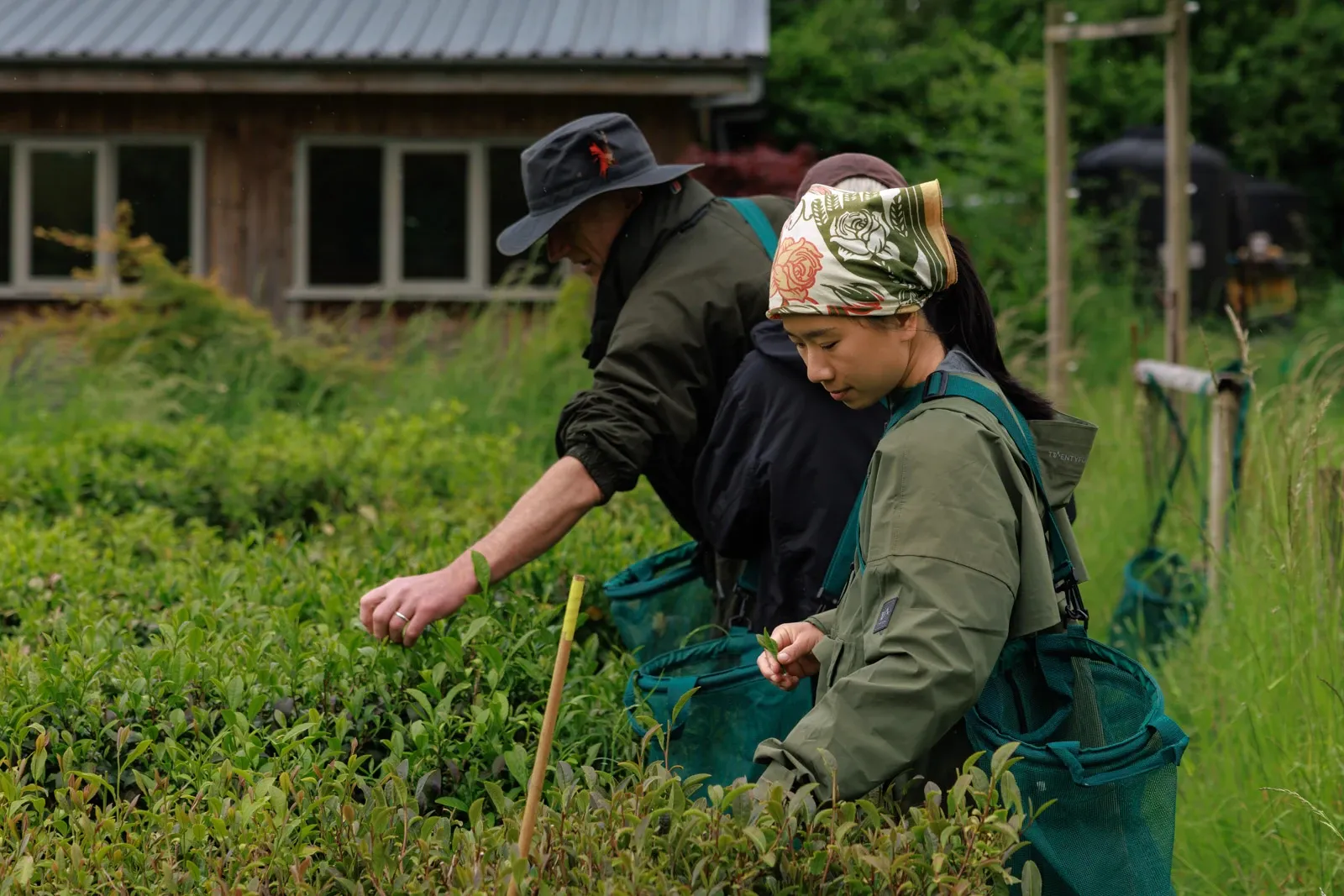
Farmers Jo and Yuki pick tea
Sun stained hands and arms stretch over tea bushes for ready leaves
Farmers Yuki and Kathryn pick tea amongst waist high tea plants
Farmers Jo and Yuki pick tea as they walk back to weigh their yield
Rough hands pick tea leaves
Dartmoor Tea Estate owner Kathryn and Jo pick tea on their farm
The Dartmoor Tea Estate team pick leaves from a tea bush under a rain shower
Tea farmer Yuki walks with full bags of tea ready to be weighed
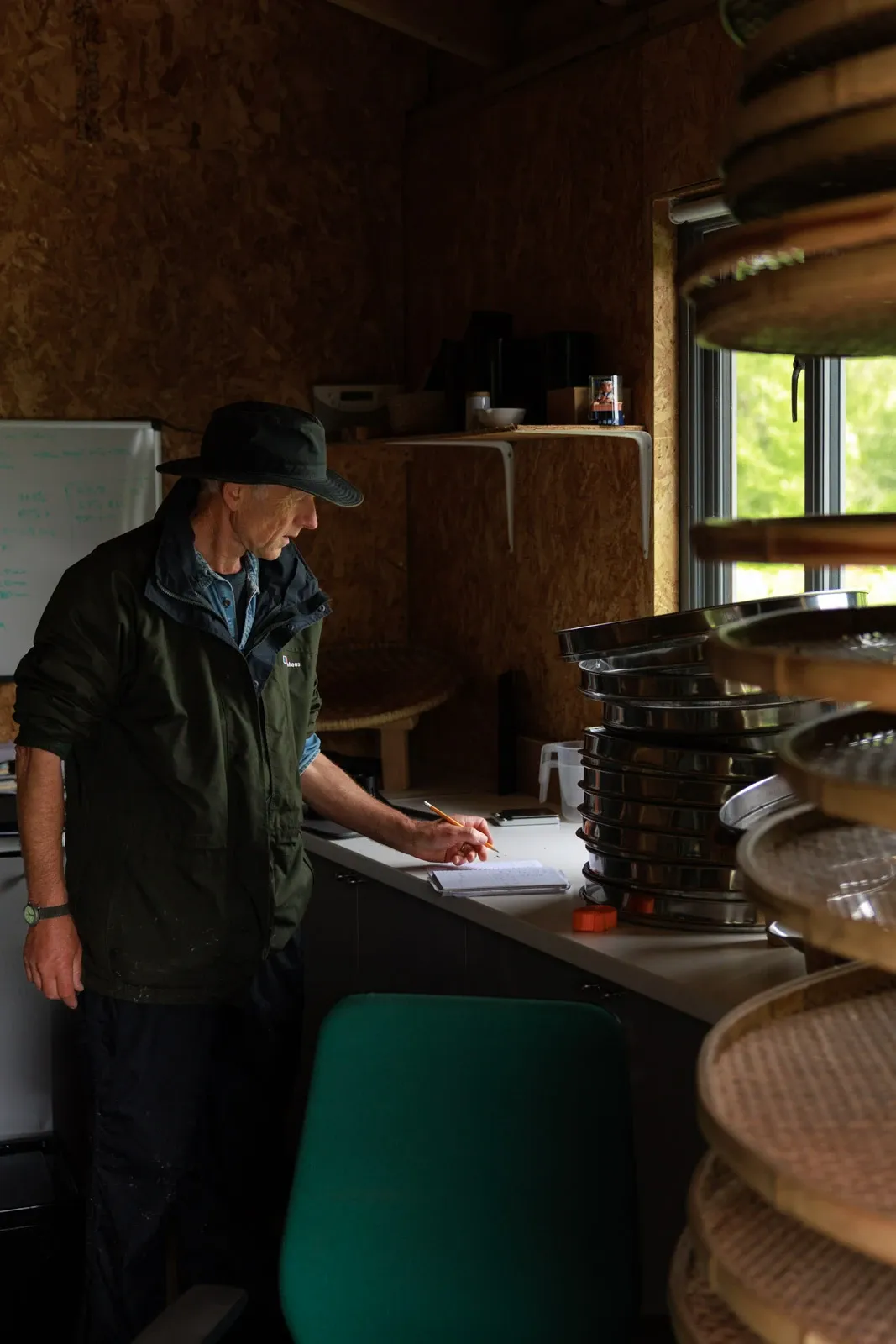
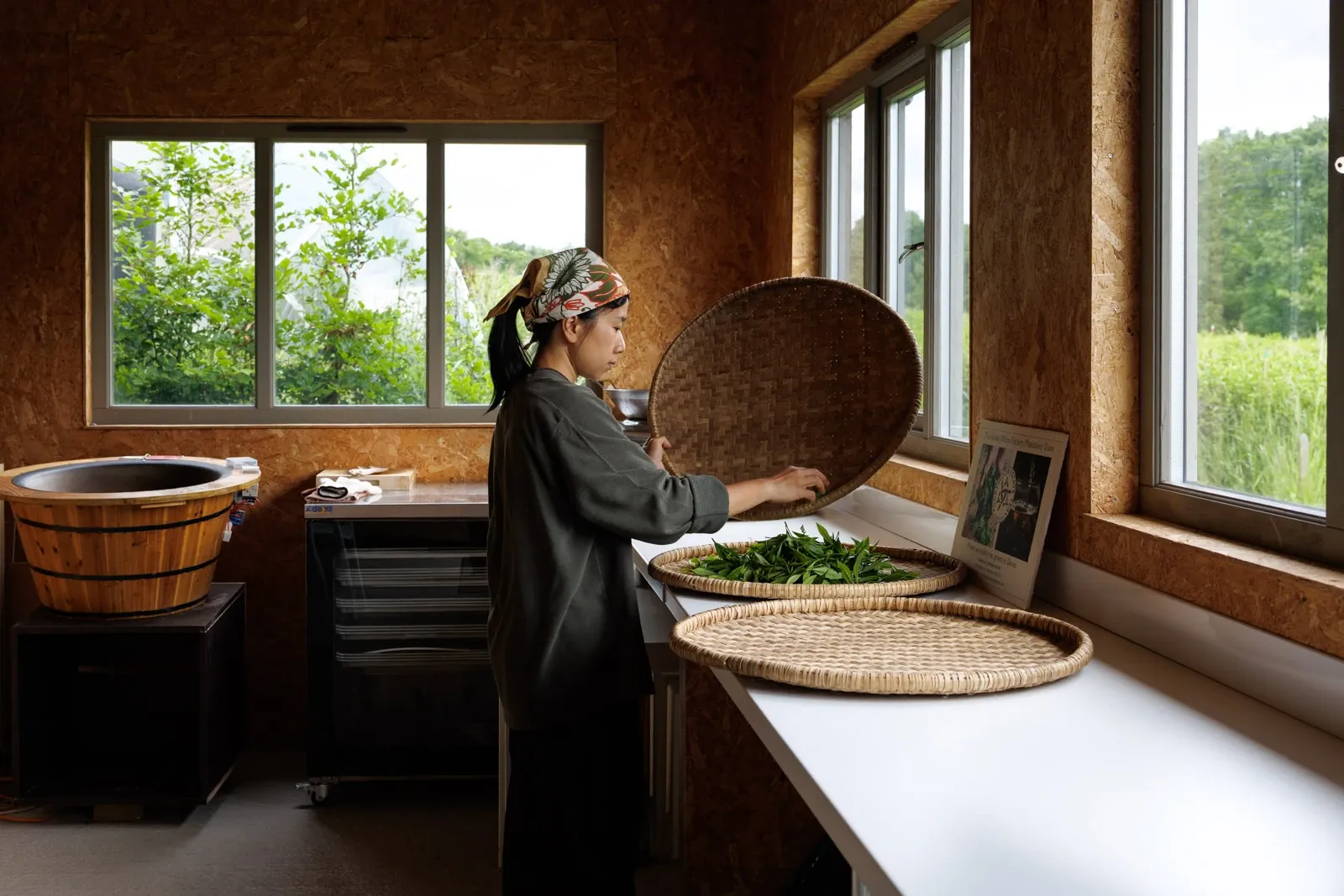
Tea farmer Jo writes the weight of the day's tea yield inside his lab by a window
The day's harvest of tea leaves ready to be processed into tea
Tea farmer Yuki inspects samples of leaves as part of her analysis of the farm

The soil at Dartmoor Tea Estate is the colour of freshly brewed black tea. That detail, noticed on the way in, turns out to be the right place to start.

For centuries, Dartmoor was a problem to be solved. The ambitious drained it, enclosed it, ploughed it, and pushed it towards productivity until the moor pushed back. Most failed. This landscape has always exacted a price from those who tried to take more than it would give.

What happens here operates on different terms. It sits on a hillside above the River Ashburn, ringed by unruly trees with long-tailed tits chattering over the pickers. This is one of only a handful of places in Britain where tea is genuinely grown, and the team begins by asking the plant’s forgiveness. The practice is quiet, habitual, and sincere. A moorland gust pulls a picker off focus mid-row. Rain is met with gratitude. In the woodland below the main gardens, they are experimenting with shaded cultivation, following the plant into new ground.

This is tea grown on land that was never supposed to grow it. That it does, and does it well, is the result not of conquest but of attention.